

Children are more likely to get infections because their immune systems are still developing. Common illnesses such as colds, flu, throat infections, and stomach infections can spread quickly, especially in schools and play areas. While many infections are mild, some may require medical attention if symptoms become severe. Understanding common childhood infections and taking preventive steps can help keep children healthy and active.
Childhood Infections – Common Illnesses in Children
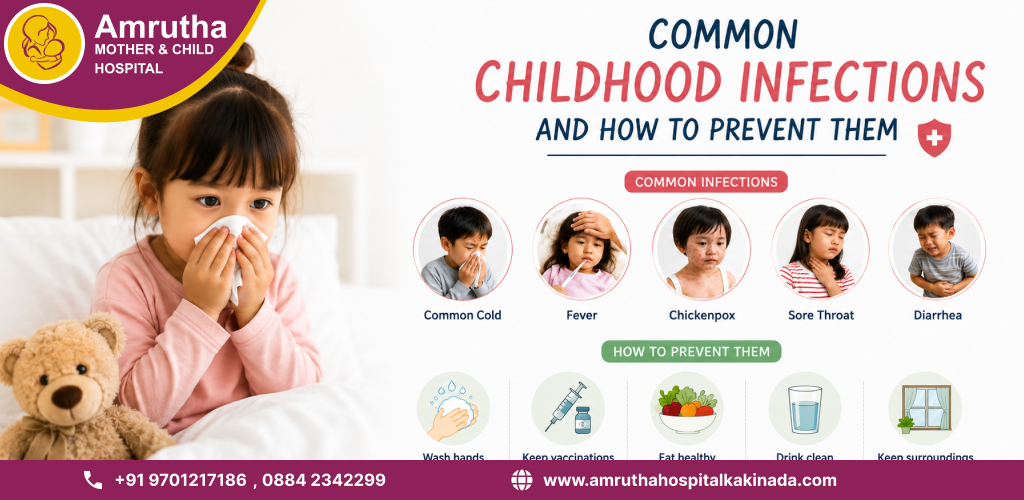
Childhood Infections may affect children in different ways depending on age and immunity. Some common infections include:
- Common cold
- Flu
- Ear infections
- Throat infections
- Stomach infections
- Chickenpox
- Conjunctivitis
These infections often spread through close contact, coughing, sneezing, or contaminated surfaces.
Common Symptoms Parents Should Notice
Children with infections may show different symptoms. Common signs include:
- Fever
- Cough and cold
- Runny nose
- Vomiting or diarrhea
- Fatigue or weakness
- Loss of appetite
- Irritability or discomfort
Symptoms may vary depending on the type of infection.
Simple Ways to Prevent Infections
Parents can help reduce the spread of infections through healthy daily habits.
- Encourage regular hand washing
- Keep children hydrated
- Maintain proper hygiene
- Provide nutritious meals
- Ensure adequate sleep
- Avoid close contact with sick individuals
- Keep toys and frequently touched surfaces clean
These simple precautions support better immunity and overall health.
Importance of Vaccination
Vaccination plays an important role in protecting children from serious infections. Routine immunizations help reduce the risk of illnesses and prevent complications. Parents should follow recommended vaccination schedules and attend regular pediatric checkups.
When to Seek Medical Attention
Some infections may require immediate medical care. Parents should consult a doctor if the child experiences:
- High fever
- Difficulty breathing
- Persistent vomiting or diarrhea
- Severe weakness
- Dehydration
- Symptoms lasting for several days
Early treatment helps prevent complications and supports faster recovery.
Conclusion
Childhood infections are common, especially during the growing years, but proper prevention and early care can help protect children’s health. Good hygiene, balanced nutrition, vaccination, and timely medical attention all play an important role in reducing the risk of illness. If your child shows symptoms related to Childhood Infections, Contact Us today for expert pediatric care and guidance.