

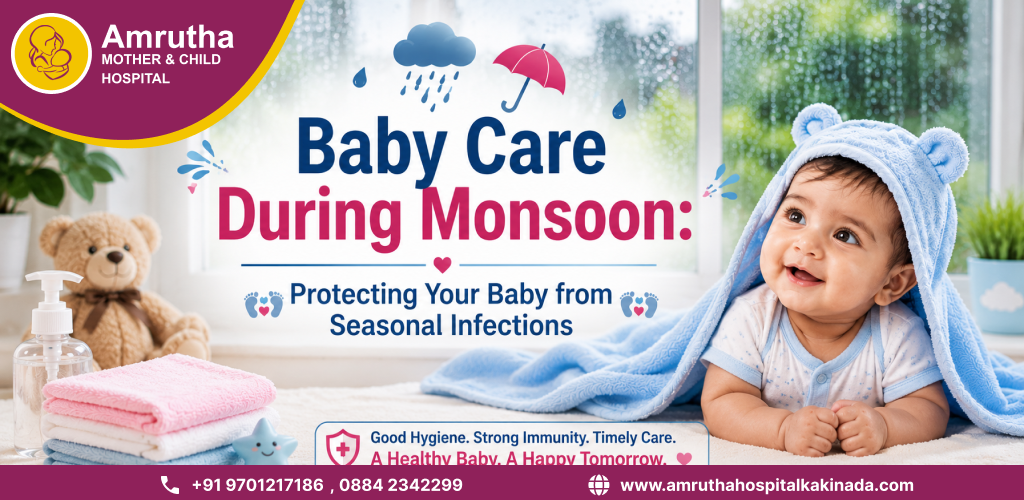
The monsoon season brings refreshing weather, but it also increases the risk of infections among babies. Due to their developing immune systems, babies are more vulnerable to bacteria, viruses, and mosquito-borne diseases during this time. Following proper Baby Care During Monsoon practices can help keep your little one safe and healthy.
Simple precautions such as maintaining hygiene, providing proper nutrition, and protecting your baby from seasonal illnesses can make a significant difference. Knowing the warning signs and seeking timely medical care also plays an important role in your baby’s overall well-being.
Why is Baby Care During Monsoon Important?
The rainy season creates an ideal environment for germs to spread. Babies have lower immunity compared to adults, making them more susceptible to infections.
Proper Baby Care During Monsoon helps:
- Reduce the risk of viral and bacterial infections.
- Strengthen your baby’s immunity.
- Prevent stomach and skin infections.
- Support healthy growth and development.
- Keep your baby comfortable throughout the rainy season.
Common Seasonal Infections in Babies
During the monsoon, babies may experience several common health problems, including:
- Common cold and cough
- Viral fever
- Diarrhea and stomach infections
- Skin rashes and fungal infections
- Ear infections
- Mosquito-borne illnesses such as dengue and malaria
Early identification of symptoms allows for timely treatment and faster recovery.
Baby Care During Monsoon: Essential Tips
Parents can protect their babies by following these simple precautions:
- Wash your hands before handling your baby.
- Sterilize feeding bottles, pacifiers, and utensils regularly.
- Continue breastfeeding to boost your baby’s immunity.
- Dress your baby in soft, breathable cotton clothing.
- Change wet clothes immediately to prevent skin irritation.
- Keep your home clean, dry, and well-ventilated.
- Prevent mosquito breeding by avoiding stagnant water around your home.
- Use mosquito nets or baby-safe mosquito protection.
- Give freshly prepared food and clean drinking water.
- Avoid crowded places during periods of viral outbreaks.
- Ensure your baby’s vaccinations are up to date.
Warning Signs You Should Never Ignore
Seek medical attention immediately if your baby experiences:
- High or persistent fever
- Difficulty breathing
- Poor feeding or refusal to feed
- Continuous vomiting or diarrhea
- Reduced urination
- Unusual sleepiness or excessive crying
- Skin rashes that spread quickly
Prompt medical care helps prevent complications and supports quicker recovery.
How Regular Pediatric Checkups Help
Routine pediatric visits are essential during the monsoon season because they help:
- Monitor your baby’s growth and overall health.
- Detecting infections at an early stage.
- Ensure vaccinations are completed on time.
- Provide parents with expert guidance on seasonal baby care.
- Address any health concerns before they become serious.
Conclusion
The rainy season doesn’t have to be a stressful time for parents. By following the right Baby Care During Monsoon practices, you can significantly reduce your baby’s risk of seasonal infections and support healthy development.
If your baby develops persistent fever, breathing difficulties, digestive problems, or any unusual symptoms during the monsoon, don’t delay seeking medical advice. Early diagnosis and timely treatment can help your little one recover quickly and stay healthy throughout the season. Contact us