

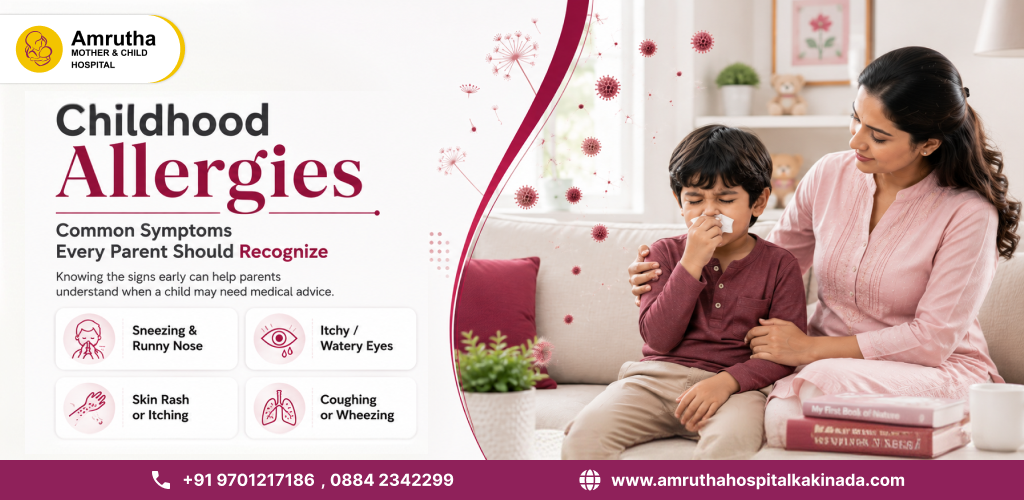
Childhood is an important stage of growth and development, but children can sometimes experience allergies that affect their daily comfort and well-being. Allergies occur when the immune system reacts to substances that are usually harmless, such as dust, pollen, certain foods, or pet dander. Recognizing the signs early can help parents take the right steps and seek medical advice when needed.
Childhood allergies can cause different symptoms depending on the trigger and the child’s sensitivity. Understanding these symptoms can help parents identify possible allergic reactions and provide timely care.
Why is It Important to Recognize Childhood Allergies?
Children may not always be able to clearly explain what they are feeling. Knowing the common signs can help parents notice changes in their child’s health.
Recognizing childhood allergies early can help:
- Identify possible allergy triggers.
- Reduce exposure to allergens.
- Manage uncomfortable symptoms.
- Prevent symptoms from becoming more severe.
- Support better comfort and daily activities.
Common Causes of Allergies in Children
Children can develop allergies because of different substances in their surroundings or diet.
Common triggers include:
- Dust and dust mites
- Pollen from plants and trees
- Pet dander
- Certain foods such as milk, eggs, peanuts, or seafood
- Insect bites or stings
- Certain medicines
- Mould and other environmental allergens
Identifying the possible trigger can help parents and doctors decide how to manage the symptoms.
Common Symptoms Parents Should Watch For
Allergic reactions can affect different parts of the body. Some symptoms may appear shortly after exposure, while others can develop gradually.
Skin Symptoms
Skin reactions are common in children with allergies.
Parents may notice:
- Red or itchy skin
- Skin rashes
- Hives or raised patches
- Swelling
- Dry or irritated skin
Nose and Eye Symptoms
Environmental allergens such as dust and pollen can affect the nose and eyes.
Common symptoms include:
- Frequent sneezing
- Runny or blocked nose
- Itchy nose
- Watery or itchy eyes
- Redness around the eyes
Breathing Symptoms
Some children may experience breathing-related symptoms during an allergic reaction.
Watch for:
- Coughing
- Wheezing
- Shortness of breath
- Difficulty breathing
- Chest discomfort
Breathing difficulties should always be taken seriously and require prompt medical attention.
Food Allergy Symptoms in Children
Food allergies can cause symptoms that range from mild to severe. Parents should pay attention to any unusual reaction after their child eats a particular food.
Possible symptoms include:
- Itching or tingling in the mouth
- Skin rashes or hives
- Swelling of the lips or face
- Stomach pain
- Vomiting or diarrhoea
- Difficulty breathing
If symptoms appear repeatedly after eating a particular food, parents should discuss them with a pediatrician rather than removing important foods from the child’s diet without medical advice.
How Can Parents Help Manage Allergies?
Simple precautions can help children avoid known triggers and reduce exposure to allergens.
Parents can:
- Keep the child’s surroundings clean.
- Reduce exposure to dust and smoke.
- Wash bedding regularly.
- Keep pets away from the child’s sleeping area if they are a known trigger.
- Encourage regular hand washing.
- Follow the treatment plan recommended by the pediatrician.
- Keep a record of possible allergy triggers and symptoms.
Proper identification and management can make childhood allergies easier to handle and help children stay comfortable.
When Should You Consult a Pediatrician?
Parents should seek medical advice if allergy symptoms are frequent, severe, or affecting the child’s everyday activities.
Consult a pediatrician if your child experiences:
- Repeated skin rashes or hives
- Persistent sneezing or nasal congestion
- Frequent coughing or wheezing
- Reactions after eating certain foods
- Swelling of the lips, face, or tongue
- Recurrent allergy symptoms without a clear cause
If your child develops severe breathing difficulty, significant swelling, or other signs of a serious allergic reaction, seek emergency medical care immediately.
Conclusion
Understanding childhood allergies can help parents recognize symptoms early and take appropriate action. Paying attention to skin, breathing, digestive, nose, and eye symptoms can help identify possible triggers and support timely medical care. If your child experiences repeated or concerning allergic symptoms, consulting a qualified pediatrician can help determine the cause and appropriate treatment.
For professional pediatric care and guidance, parents can consult the best hospital in Kakinada for proper evaluation and personalized care. Early attention can help children manage allergies safely and continue enjoying a healthy and active childhood. Contact us