


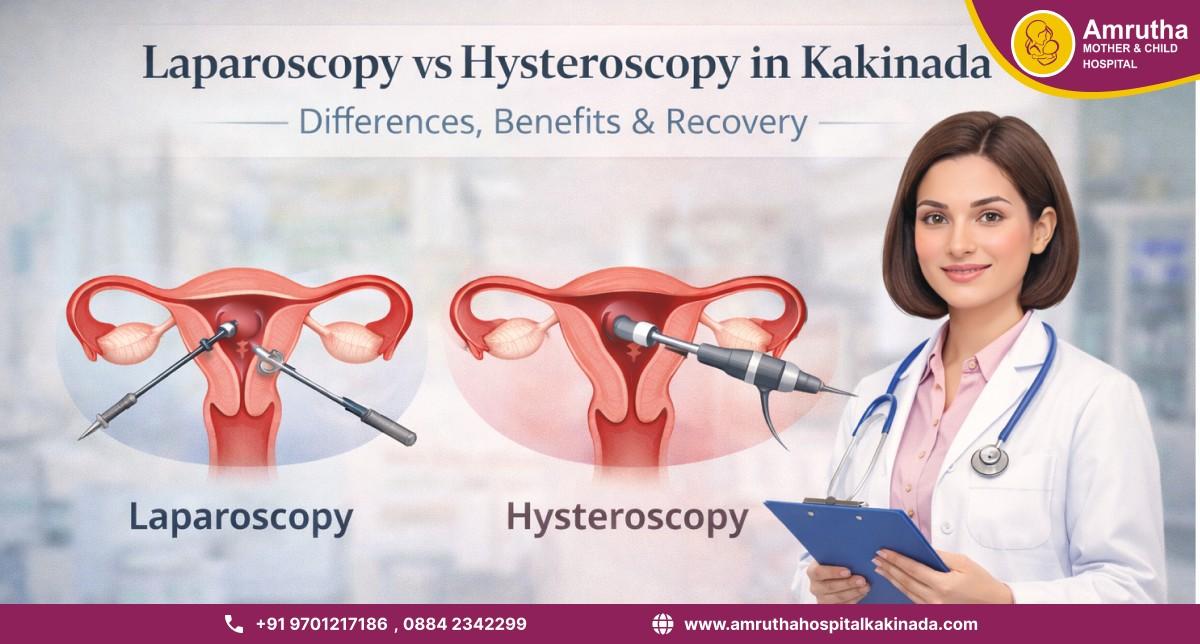
Women experiencing gynecological issues often hear about minimally invasive procedures like laparoscopy and hysteroscopy. While both are advanced techniques used for diagnosis and treatment, they serve different purposes.
If you are searching for Laparoscopy vs Hysteroscopy in Kakinada, this guide will help you understand the differences, benefits, and recovery process so you can make informed healthcare decisions.
What is Laparoscopy?
Laparoscopy is a minimally invasive surgical procedure that allows doctors to examine organs inside the abdomen and pelvis using a thin instrument called a laparoscope.
A small incision is made near the navel, and a camera is inserted to view the internal organs on a monitor.
Common Reasons for Laparoscopy
- Ovarian cyst removal
- Treatment of endometriosis
- Ectopic pregnancy management
- Fibroid removal
- Evaluation of infertility
- Tubal ligation
Laparoscopy is often called “keyhole surgery” because it requires very small incisions.
What is Hysteroscopy?
Hysteroscopy is a procedure used to examine the inside of the uterus. Unlike laparoscopy, no abdominal incision is required. A thin, lighted instrument called a hysteroscope is inserted through the vagina and cervix into the uterus.
Common Reasons for Hysteroscopy
- Abnormal uterine bleeding
- Uterine polyps
- Fibroids inside the uterus
- Recurrent miscarriages
- Removal of retained products of conception
- Evaluation of infertility
Hysteroscopy mainly focuses on conditions inside the uterine cavity.
Key Differences Between Laparoscopy and Hysteroscopy
Understanding the difference helps in choosing the right treatment.
1. Area Examined
- Laparoscopy: Abdomen and pelvic organs (ovaries, fallopian tubes, outer uterus)
- Hysteroscopy: Inside of the uterus
2. Incision
- Laparoscopy: Small abdominal incisions
- Hysteroscopy: No external incision
3. Anesthesia
- Laparoscopy: Usually requires general anesthesia
- Hysteroscopy: May use local, regional, or general anesthesia
4. Recovery Time
- Laparoscopy: 1–2 weeks depending on procedure
- Hysteroscopy: 1–3 days in most cases
5. Purpose
- Laparoscopy: Diagnosis and surgical treatment of pelvic conditions
- Hysteroscopy: Diagnosis and treatment of uterine cavity problems
Benefits of Minimally Invasive Procedures
Both procedures offer several advantages compared to traditional open surgery:
- Smaller incisions
- Less pain
- Minimal scarring
- Reduced hospital stay
- Faster recovery
- Lower risk of infection
For women considering Laparoscopy vs Hysteroscopy in Kakinada, these advanced procedures provide safe and effective treatment options.
Recovery After Laparoscopy
After laparoscopy, patients may experience:
- Mild abdominal discomfort
- Shoulder pain (due to gas used during surgery)
- Fatigue for a few days
Recovery Tips
- Take prescribed medications
- Avoid heavy lifting for 1–2 weeks
- Keep incision area clean
- Follow up with your doctor
Most women return to normal activities within one to two weeks.
Recovery After Hysteroscopy
Recovery from hysteroscopy is generally quicker.
You may experience:
- Mild cramping
- Light vaginal bleeding
- Slight dizziness
Recovery Tips
- Rest for 24 hours
- Avoid intercourse for a few days (as advised)
- Monitor for heavy bleeding or fever
Most patients resume daily activities within 1–3 days.
When to Consult a Gynecologist?
Seek medical consultation if you experience:
- Severe pelvic pain
- Heavy or irregular menstrual bleeding
- Difficulty conceiving
- Recurrent miscarriages
- Persistent abdominal discomfort
An experienced gynecologist can determine whether laparoscopy or hysteroscopy is the right procedure for you.
Conclusion
Both laparoscopy and hysteroscopy are advanced, minimally invasive procedures designed to diagnose and treat gynecological conditions effectively. The choice depends on the underlying medical issue and the area that needs examination.
If you are looking for expert guidance on Laparoscopy vs Hysteroscopy in Kakinada, consult a qualified specialist to receive personalized evaluation and treatment recommendations.
Early diagnosis and timely intervention can significantly improve women’s reproductive health and overall well-being. Contact us